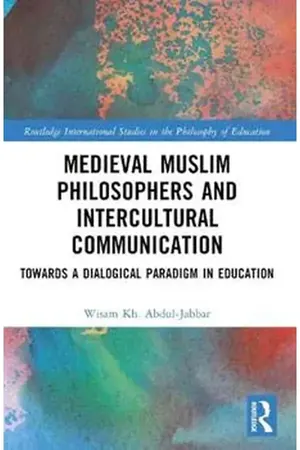
Medieval Muslim Philosophers and Intercultural Communication: Towards a Dialogical Paradigm In Education
Only 1 left from this seller
Compare sellers
| Seller | Condition | Delivery | Price | |
|---|---|---|---|---|
R Readings Lahore | New | 2–5 days Courier paid on delivery | Rs 13,046Rs 14,495 |
More in Islamic books
About Medieval Muslim Philosophers and Intercultural Communication: Towards a Dialogical Paradigm In Education
This book examines the works of Medieval Muslim philosophers interested in intercultural encounters and how receptive Islam is to foreign thought, to serve as…
This book examines the works of Medieval Muslim philosophers interested in intercultural encounters and how receptive Islam is to foreign thought, to serve as a dialogical model, grounded in intercultural communications, for Islamic and Arabic education. The philosophers studied in this project were instructors, tutors, or teachers, such as Al-Kindi, Al-Farabi, Al-Ghazali, and Averroes, whose philosophical contributions directly or indirectly advanced intercultural learning.
The book describes and provides examples of how each of these philosophers engaged with intercultural encounters, and asks how their philosophies can contribute to infusing intercultural ethics and practices into curriculum theorizing. First, it explores selected works of medieval Muslim philosophers from an intercultural perspective to formulate a dialogical paradigm that informs and enriches Muslim education. Second, it frames intercultural education as a catalyst to guide Muslim communities’ interactions and identity construction, encouraging flexibility, tolerance, deliberation, and plurality. Third, it bridges the gap between medieval tradition and modern thought by promoting interdisciplinary connections and redrawing intercultural boundaries outside disciplinary limits. This study demonstrates that the dialogical domain that guides intercultural contact becomes a curriculum-oriented structure with Al-Kindi, a tripartite pedagogical model with Al-Farabi, a sojourner experience with Al-Ghazali, and a deliberative pedagogy of alternatives with Averroes. Therefore, the book speaks to readers interested in the potential of dialogue in education, intercultural communication, and Islamic thought research.
Crucially bridging the gap between medieval tradition and modern thought by promoting interdisciplinary connections and redrawing intercultural boundaries outside disciplinary limits, it will speak to readers interested in the dialogue between education, intercultural communication, and Islamic thought.
Book details
| Author | Wisam Kh. Abdul-jabbar |
|---|---|
| Publisher | Taylor & Francis UK |
| Language | English |
| Pages | 200 |
| Format | Paperback |
| ISBN | 9781032423807 |
Ratings and reviews
No reviews yet. Reviews come only from customers who bought and received this book.